 Historic Stones
A stone lifted since 'time immemorial' that gave its name to the village of Mainstone and may be the best evidence yet of England's stonelifting past.
Calum Stott
Historic Stones
A stone lifted since 'time immemorial' that gave its name to the village of Mainstone and may be the best evidence yet of England's stonelifting past.
Calum Stott
Guest article by Calum Stott
The Mægen Stān of Mainstone – What’s in a name?
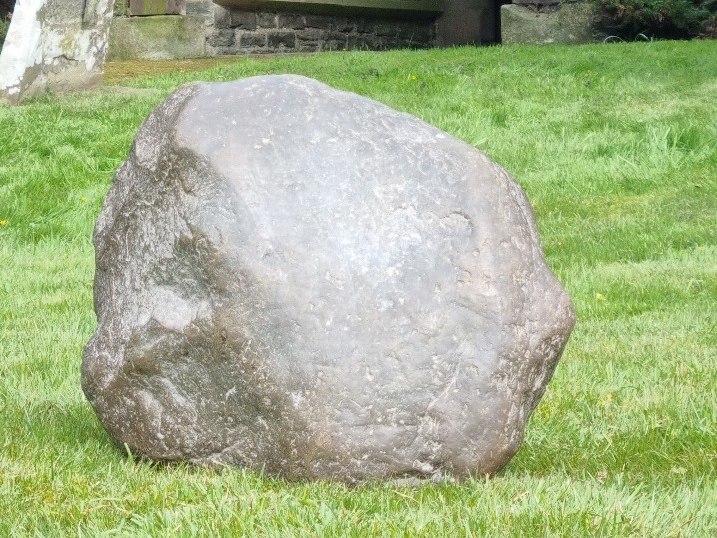
The Mægen Stān (pronounced “ma-yen staan”1), also known as the Maegen Stone, Maen Stone, or Main Stone, is an angular block of dark grey stone, weighing 91.5kg (201.5 lb). It sits inside the church at Mainstone in the south-west of Shropshire, and it has to be one of my favourite lifting stones in England because of the story behind its name and the deep history that goes along with it.
I first heard about this stone after a tip-off from a stranger on Facebook, who had seen a short news clip on BBC Look North about stonelifting and reached out with a story from his past. He had been an agricultural chaplain in Shropshire in the early 90s and recalled a conversation with a farmer local to Mainstone who had mentioned a stone which sat inside the church and was used in competitions. It would be transported to the Clun Fair every year for men to compete to see who could lift it onto and over the shoulder. Unfortunately, this all stopped around 1910 when a gentleman broke his back whilst making an attempt. With that little gem of information, I began my research.
England has long been considered the only nation in the British Isles without a documented history of lifting heavy stones to prove strength, though recent research has uncovered several instances and mentions of stone lifting/throwing in England’s past – dating as far back as the 11th century with the practice being written about in medieval literature as well as historical accounts of London. Only a small number of lifting stones have yet been found. The Maegen Stone might be the first strength stone with sufficient history to describe what a stonelifting culture might have looked like in England.
The stone’s name is intriguing and gives us a possible glimpse into the nomenclature of stonelifting in England. In Scotland their stones are named Clach Neart and Clach Thogalich, or Ultach in the Outer Hebrides; Ireland has Cloch Neirt; Wales has Y Garreg Orchest. These names not only help to define the stone, but they can tell us how or why they were lifted.
Until now, England appeared to lack a comparable example. The only words we had in English to describe the practice were:
- “putting stone”
- “casting the stone”
These names or phrases could describe the action but not the stone itself, or how and why it was lifted. The “putting stone” over the years came to describe a small handheld stone which fit in one hand, similar to the shot put. Though this had been suggested by Peter Martin in his unfinished work Twixt the Stone and the Turf to be incorrect in Scotland. In fact, it was a broader term used to describe strength stones of a wide range of weights. This theory may extend to the rest of the UK, being that it was Thomas Pennant – a Welshman – who first described a Scottish Clach Neart as a Putting Stone. Similarly, where the sport of “casting the stone” is recorded, the size and weight couldn’t be ascertained. Yet in modern times it was assumed to be a stone which would fit into a single-handed grasp even though a winning cast often reached no further than 10 feet (3.05m) – suggesting a weight far greater than that of a shot put.
For many years, stonelifters and stone historians believed England had no stonelifting culture, or that it had died out so long ago it was completely forgotten. Which is why when I came across the Mægen Stān (or Maegen Stone in modern English), whose name is said to have been adopted by the village where it resides and is thought to originate from the Old English for “Strength Stone”, I was blown away.
Clun Fair
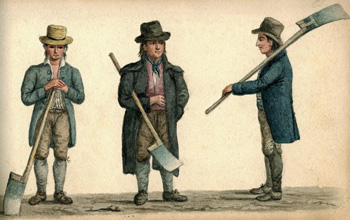
Since the stone allegedly caused a man to break his back at the Clun Fair, I thought that would be an obvious place to start. Clun Fair today is a music and fringe festival celebrating the Green Man, an entity which represents nature and rebirth. However, historically it was a hiring fair – a tradition with medieval roots that flourished into the Victorian era. It was a day where labourers would dress in their finest attire, often holding a symbol of their trade (a crook for a shepherd or a milking pail for a cowman for example) to sell their skill to a prospective employer. Those looking for staff would travel from surrounding areas, hiring these workers after negotiating terms of employment, including wages, food allowances, and living conditions. The contracts were often verbal and witnessed by others at the fair, making them legally binding for between six months and a year.2

The fair at Clun, as with many hiring fairs, was also an opportunity to get together with friends and celebrate – so much so that Clun Valley Parochial Magazine issued a statement from the local Reverend in 1891:
Clun May Fair: Monday 11th May is the day of our annual hiring and pleasure fair. Interested as we are in the welfare of all young people, we take this opportunity of affectionately warning them of the many temptations and snares which will meet them on that day. Let it be by all means a day for innocent enjoyment and a pleasant reunion of friends and relations, but it cannot be really a happy day if it is the occasion for excessive drinking which drags down the character and prepares the way for future misery.3
It is little wonder that a local strength-testing stone was brought to the fair. Not only could people lift it for entertainment, but also as a show of strength to prospective employers – similar to the “Farmhand stones” found in Sweden, which were used to prove one’s strength before getting a job. Unfortunately, after trawling through newspaper archives from the area, I have yet to find any documented account of a stone being lifted at the fair. So with that dead end, I turned my research to the parish of Mainstone.
Mainstone
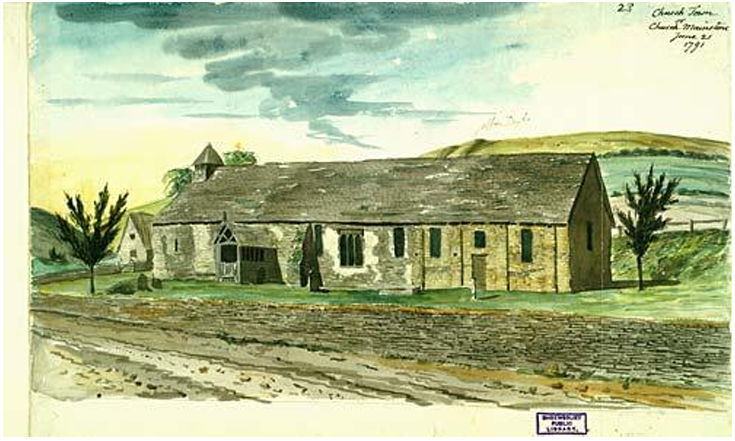
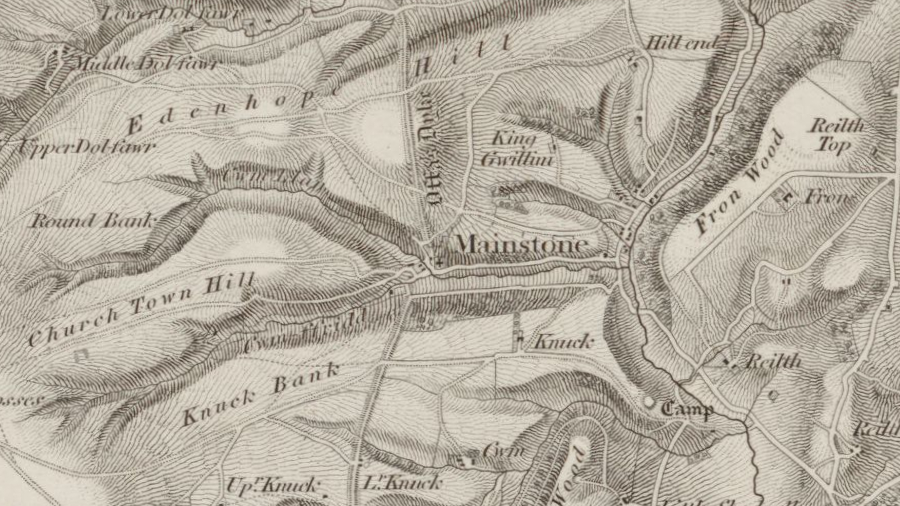
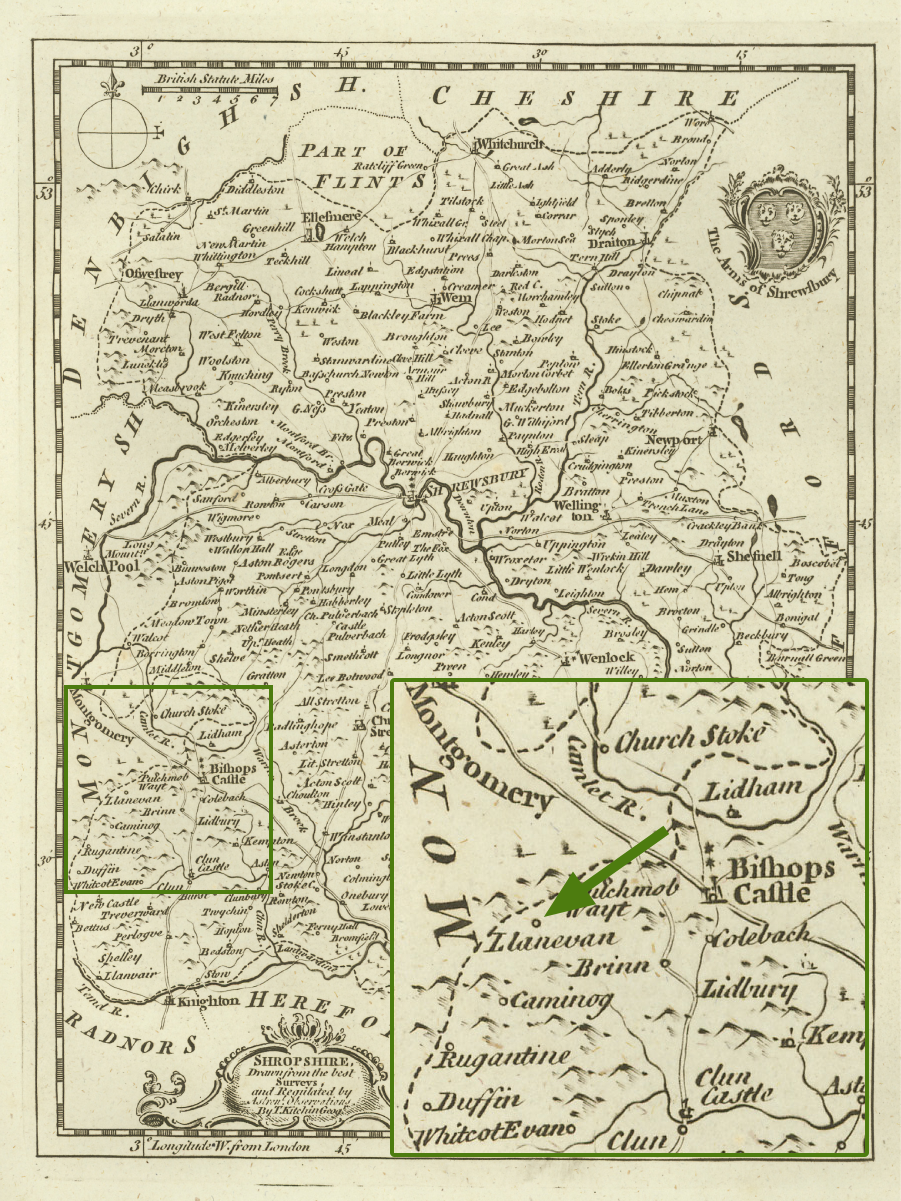
Mainstone is a quiet and sparsely populated village on the England-Wales border, located in the south-west corner of Shropshire just 5 miles (8km) from the market town of Clun, hidden away in the secluded Shropshire Hills National Landscape. The renowned earthwork known as Offa’s Dyke dissects the parish almost in half, running just past the village church. It would have been on the frontline of the advancing Anglo-Saxons during the Early Medieval period, and disputed ground as the Welsh/Britons of Cymru pushed back to reclaim their lost lands. The King of Mercia is thought to have built the linear earthwork in the late 8th century as a defensive boundary against the indigenous Britons to halt their advance. It’s not surprising that place-name origins can be traced back to both Welsh and Old English throughout this area.
The picturesque parish and village are so unassuming that very little has been written about them through the annals of time. In fact, it’s unknown exactly when the village first became a part of England. Two of the earliest descriptions of the parish emphasise this point perfectly:
I cannot say that Mainstone and Reilth were held under any English Suzerain before the 14th century, for we never hear of such places. I must therefore leave it undetermined whether they were involved in the Domesday Manor of Clun, or whether they were annexed to that Honour by conquest, before the subjugation of Wales
– R.W. Eyton in Antiquities of Shropshire4
In Eyton’s Antiquities scarcely anything is said respecting this parish. It was in the Marches of Wales, close on the border, and out of the way of ordinary traffic. It thus escaped that notoriety which gained for more accessible places
– Rev. C. H. Drinkwater5
The stone in question now sits beside the pulpit inside the parish church of St John the Baptist, and a notice inside the church tells that the village gained its name from this very same stone. Interestingly, the village is not mentioned in the Domesday Book, commissioned by William the Conqueror in the 11th century. Its earliest written record dates from 1284 during the reign of Edward I, appearing in the Calendar of Close Rolls preserved in the Public Record Office, where the village is recorded as “Meyneston”.6
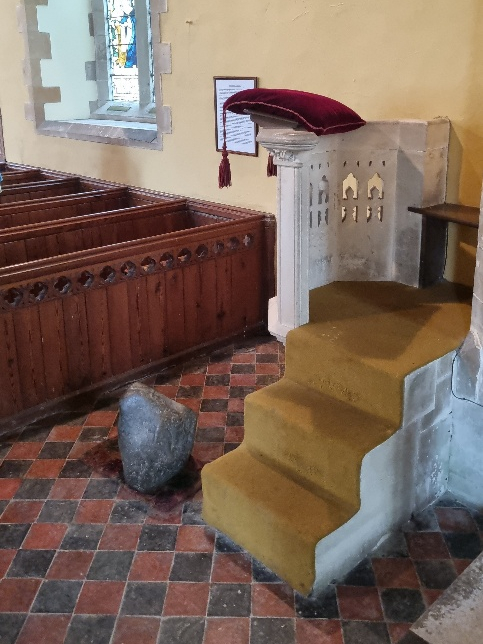
If the story holds true on the origins of the village, it can be presumed that the Maegen Stone existed by the 13th century. The spelling of the village’s name changed forms over the centuries, recorded as: Maynstan, Maynston, Maynestone, Mainestone, and now Mainstone.7 The etymology of the village’s name is disputed, with two schools of thought on the origins:
1. Maen Stān: A composite word from the Welsh maen (stone), and the Old English stān (stone).
Giving the name ‘Stone-Stone’ (once in Welsh and once in English), a fitting name for a parish which straddled the English-Welsh border that suited both languages. Similar tautological place names exist across the UK such as: River Avon (river-river), Hayle Estuary (estuary-estuary), and Torpenhow (hill-hill-hill). However, Richard Morgan, honorary lecturer at the School of Welsh at Bangor University and author of Welsh Place-names in Shropshire, disputes this theory. He suggests that:
Spellings rule out Welsh “maen” – ‘stone, rock’ as the first element although pronunciation is similar to that of Main- in Mainstone. This mistaken association is found in a number of histories and in the work of antiquarians (Welsh and English). It is very easy to understand how the association might be made, of course, particularly since this area was once a mix of Welsh and English-speakers.
2. Mægen Stān: A composite word from the Old English mægen (strength, power, might), and stān (stone).8
Giving the name ‘Strength Stone’. A name immediately recognisable to stonelifters. This etymology from Old English is suggested by Dr Margaret Gelling OBE, former President of the English Place-name Society and Fellow of St Hilda’s College, Oxford.
Dr Gelling suggests:
It is possible that mægen in this compound has the sense which it retains in the phrase ‘might and main’. This accords better than ‘big’ with most of the examples which occur in Old English – Its surface is extremely smooth and shiny, as if from much handling.8,9
Richard Morgan further states that many Welsh language sources name this area as “Llanifan” or “Llanieuan” (meaning ‘Church dedicated to St John’), rather than Mainstone, with the earliest record being “LL.Jeuan” c.1562. This likely explains the small township west of Mainstone being known as “Churchtown”, though there is no mention of “maen” or “stone” in the Welsh naming.
There is at least one other example of a village being named after a strength stone. A small township in Ireland named Cloghnart in County Monaghan is thought to have gained its name from a lifting stone at a nearby fortress.10 At the time of writing, no lifting stone has yet been found at Cloghnart, though research is ongoing by David Keohan. Some sources give its name in Irish as Cloch an Fhearta (meaning ‘stone of the (grave) mound’).
The renowned Irish etymologist, Patrick Joyce, writes in Irish Names of Places, vol. 3:
Cloghnart in Monaghan; Clock-neirt [-nert], the stone of strength: from a stone lying in an old fort which the men were accustomed to lift as a trial of strength. A usual custom all through Ireland.11
Whether the area of Mainstone predates the stone, or the parish took its name from the stone over time after replacing an older name, we may never know. But we do know:
- The earliest spelling of the village has a pronunciation closer to the Old English Mægen Stān.1
- The Old English language died out by 1150 AD, suggesting the stone predates the earliest record of the village in 1284.
- R. Morgan ruled out the Welsh maen etymology theory.
- M. Gelling supported the mægen etymology.
- The Welsh naming of the area contains no element connected to maen (rock/stone).
- Local folklore and oral history suggests the village got its name from the stone, and the stone had always been used as a test of strength.
So we can reasonably assume that the etymology of Mainstone comes from Mægen Stān, giving us the Village of the Strength Stone.
The stone
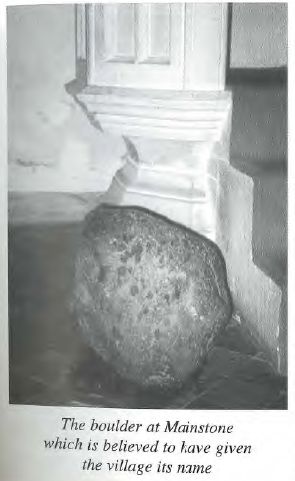
The angular block of dark grey stone was first reported as weighing 104kg (230 lb) in the 19th century, its surface is glassy-smooth, and has an obvious patina where many hands have left their mark. It shows signs of scratch marks and chips, most probably the scars of its past being lifted and dropped over hundreds of years. The earliest written reference to the stone is in the Transactions of the Shropshire Archaeological and Natural History Society in 1884.5
The stone from which the parish seems to have taken its name lies outside the west gate of the Church. It is a small granite boulder of an irregular shape, weighing about 230 lbs. Of its history nothing could be learned from the two persons who, at our visit, seemed to compose the population of the place. It is now used by the young men of the neighbourhood as an instrument whereby to try their muscular development, and this is the only use to which it has been put from time immemorial.
– Rev. C. H. DRINKWATER, M.A.
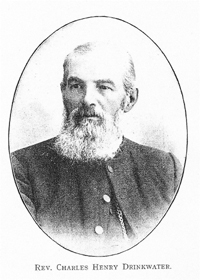
Charles Drinkwater was a prominent vicar of St George’s Church, Shrewsbury as well as a local historian, becoming a member of Shropshire Archaeological and Natural History Society.12 This short reference from a travelling vicar in the late 1800s is the most detail we have for the history and purpose for the stone. What a stroke of luck that he ran into those two people on his visit! Not only do we hear firsthand from the locals that the stone had been used as an “instrument to try their muscular development” but that this is the only use for this stone “since time immemorial”.
I make specific note of this reference, as the stone has since been claimed not only as a test of strength, but as a set measure for weighing a bag of wheat. The National Heritage List for England notes, almost in passing, that “it has been suggested that it was used as the measure for a bag of wheat (20 lbs plus 4 ½ lbs for the bag).”13 I have been unable to trace that suggestion to any source. The quoted figure is absurd for a stone that’s only ever been recorded as over 200 lb (~90kg):
- 230 lb (104.3kg), by Rev. C. H. Drinkwater in 1884
- 206.5 lb (93.6kg), from a 1958 newspaper report
- 224 lb (101.1kg), by Roy Palmer, in Folklore of Shropshire in 200414
- 204.5 lb (92.5kg), from a leaflet in the church at Mainstone
The List cites D.H.S. Cranage’s An Architectural Account of the Churches of Shropshire,15 but Cranage clearly describes a lifting stone, with no mention of a grain measure:
The stone, from which the parish is supposed to derive its name, is inside the churchyard gate. It is an old custom for the young men of the place to test their strength by lifting it or heaving it a short distance. The stone is probably a relic of the ice age.15
I’m unsure why Historic England didn’t mention the stone being used as a test of strength – it’s an important detail in the history of the church and parish, and they seem to use Cranage’s wording near verbatim when describing the stone, so it’s odd to omit that part. Did they intentionally leave it out of the listing? Did a local’s explanation of the stone get misconstrued by a surveyor? I’m not sure we’ll ever know.
Even if the “20 lbs” figure is a clerical error and they meant “200 lbs” or “230 lbs”, using the stone to measure grain is still implausible. I checked whether the stone’s mass matched any historic regional dry measures such as the crannock or coomb16,17,18 and found nothing convincing; grain was traded by volume, so a standard weight is an unlikely use. Finally, the National Heritage List is the only source I found describing the stone as a grain measure, so I really think there was a mistake. Drinkwater’s two locals had it right all along.
The lift and cast
The Maegen Stone is relatively light compared to other stones of strength in the UK at 91.5kg (201.5 lb), but what sets the stone apart is its unique lifting style. Once again, we are indebted to Rev. Drinkwater and the two locals he met on that fateful day. He records that the style used for this stone lift, as described below:
This trial is made by lifting it up to the height of their faces, and then casting it over the left shoulder. The difficulty involved in getting a sufficient grip of it enhances the danger as well as the credit of making a satisfactory cast
Not just a lifting stone, but a throwing stone too. A style reminiscent of the two Y Maen Camp (feat stones) at the churches in Efenechtyd and Llanwddyn, which weigh 46kg (101 lb) and 34kg (75 lb). Their associated feat was to throw them backwards over the head, giving the Maegen Stone a possible link to the Welsh custom, though how far behind the head anyone was casting the 91.5kg (201.5 lb) stone is yet to be seen.
The cast of the Maegen Stone can be more accurately described as a shove over the shoulder rather than a throw in the real sense. As far as I am aware, the only other example of this style of stone throw is found in Norway with the Trolten stone in Åsland, a 93.5kg (206 lb) lifting stone documented by Knut Einar Skår, weighing only 2kg (5 lb) heavier than the Maegen Stone. Whilst the stones are both very similar in weight, the Norwegian stone is, in contrast, almost spherical. The traditional lift is to raise the stone from “the ground in one movement, rolling it up your torso and throwing it over your shoulder such that it lands behind you”.19
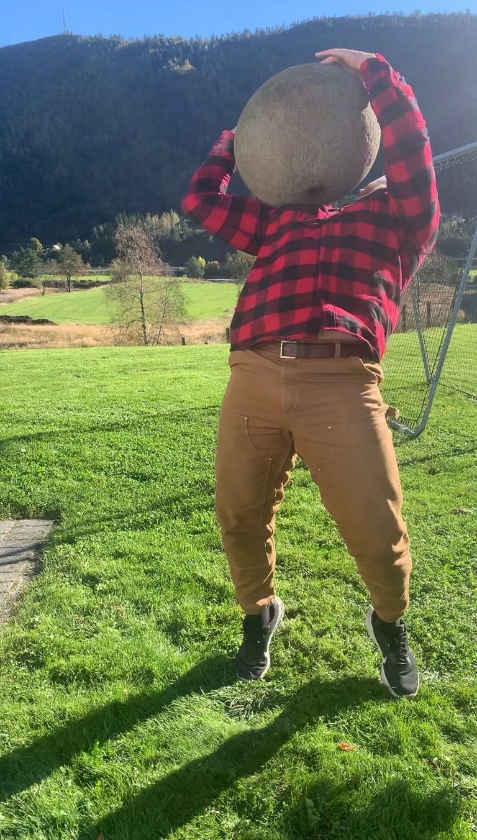
One further example of the Maegen Stone being thrown comes from a walking guide written by Shropshire Council in the early 2000s which suggests that the stone was thrown over the local stream:
However there is a local folk tale, dating from the 19th century, which recounts the stone (weighing 204.5 pounds!) was used by the young men of the locality to demonstrate their strength and win their lady love. According to the tale the young men competed in a test of strength which involved throwing the stone across the quaintly named River Unk. The one to throw the ‘mainstone’ the furthest won the hand of the lady of his choice. It is unlikely that the local youth of today would go to such lengths to ‘get their girl!’20
After reaching out to the Rights of Way Officer at Council they no longer have access to any of the references as the leaflet went out of print in 2008. They suggested it came from a book on local folklore, but as of writing this, I have been unable to track it down. If true, it does add another interesting element to the stone’s history. The folk tale is very similar in nature to that of the Bewkley Blue Stane and Clach a Bhoisgean where these stones were lifted to the shoulder and carried a certain distance to prove you were fit for marriage.
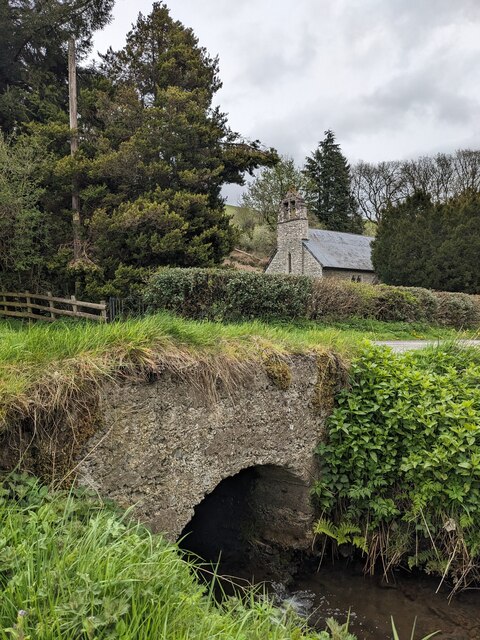
The River Unk, which the stone was supposedly thrown over is a main tributary of the River Clun, but it flows south almost half a mile (800m) away from the church. Two smaller streams, the “Cwm Ffrydd” and “Stevens Dingle” converge near the church where the road crosses Offa’s Dyke. At this point in the upper reaches of the Shropshire Hills, the waterways are no more than narrow ditches that could be easily leapt over. At no more than 3 feet wide (0.9m), the tale of throwing the stone over the water is certainly believable.
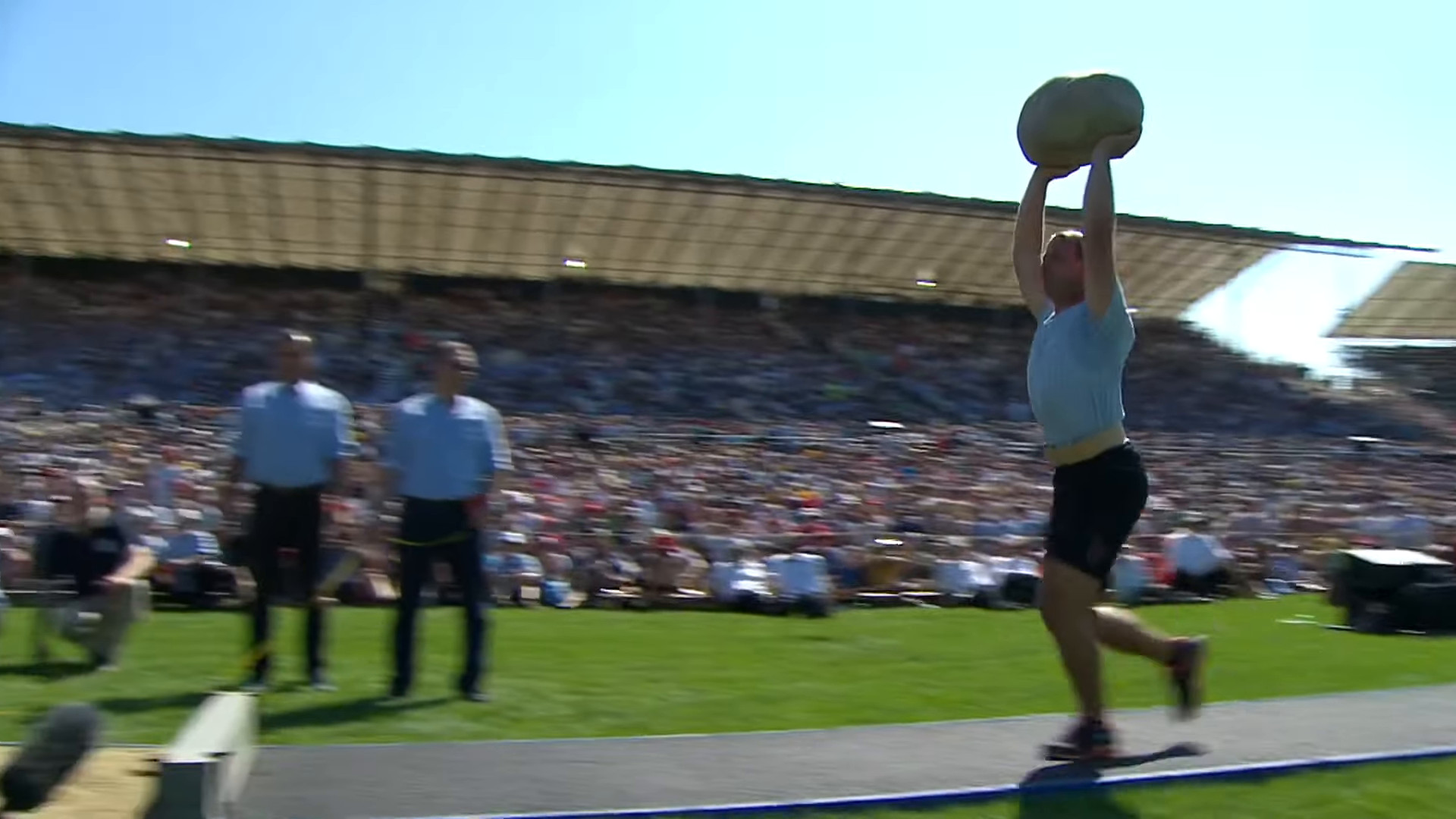
With a run-up and a throw from the chest or overhead, the Maegen Stone could probably be thrown over the river. This style of stone throwing is well known on the continent at the Unspunnenfest in Switzerland, where the sport of Steinstossen has been well practiced among the alpine population since at least 13th century. Two of their most famous stones are the Unspunnen Stone weighing 83.5kg (184 lb) – used in competition since 180821 – and the Ybrig Stone, named after the legend of the Ybrig Giant. The current record for the 90.5kg (200 lb) Ybrig Stone is 3.55m (11.7 feet) held by Daniel Kranzelbinder, suggesting a throw of 3 feet (0.9m) with the Maegen Stone, at nearly the same weight, is certainly possible – especially if it was to win the hand of your lady love.
Our visit
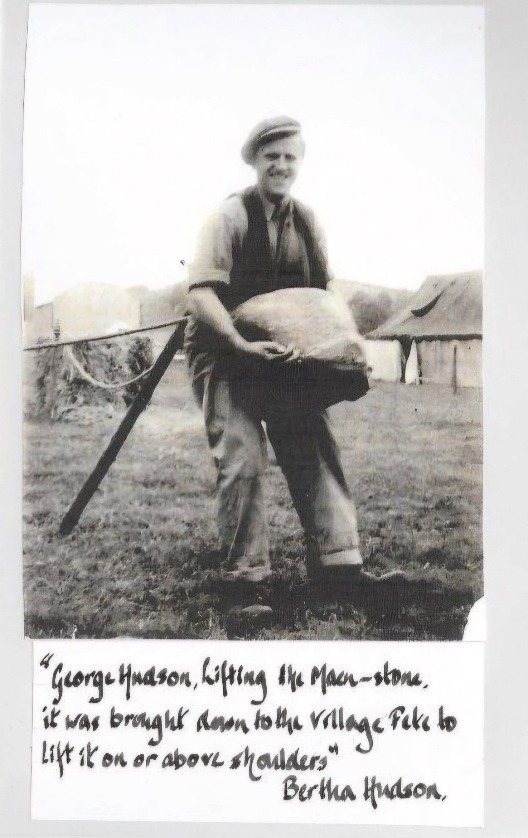
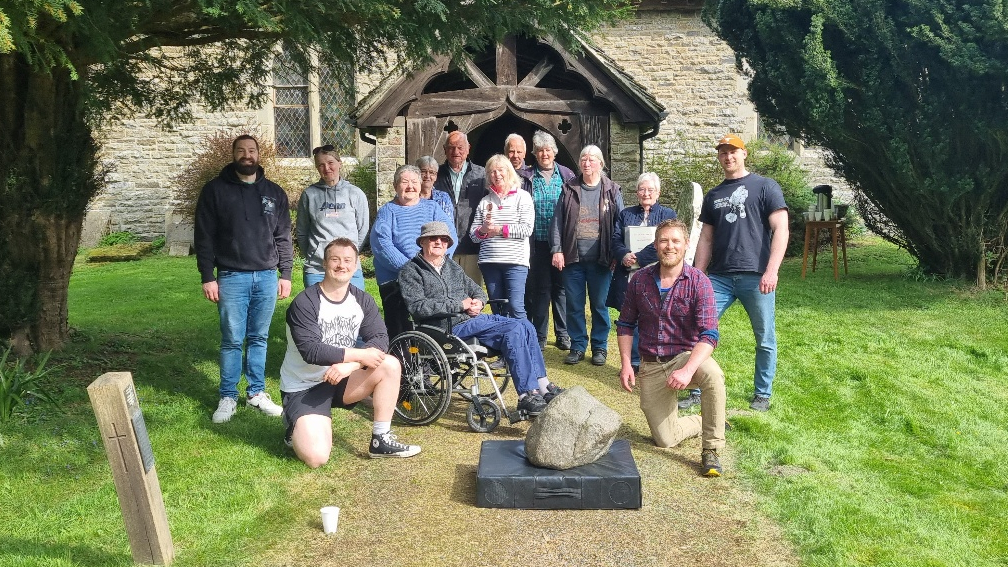
After being invited by Nowela (the church warden) to come see the stone, we made the trip to Mainstone in spring 2025. I was surprised to find several members of the community in attendance, including some family members of the sadly now deceased George Hudson (who can be seen lifting the stone to his waist in the above photo).
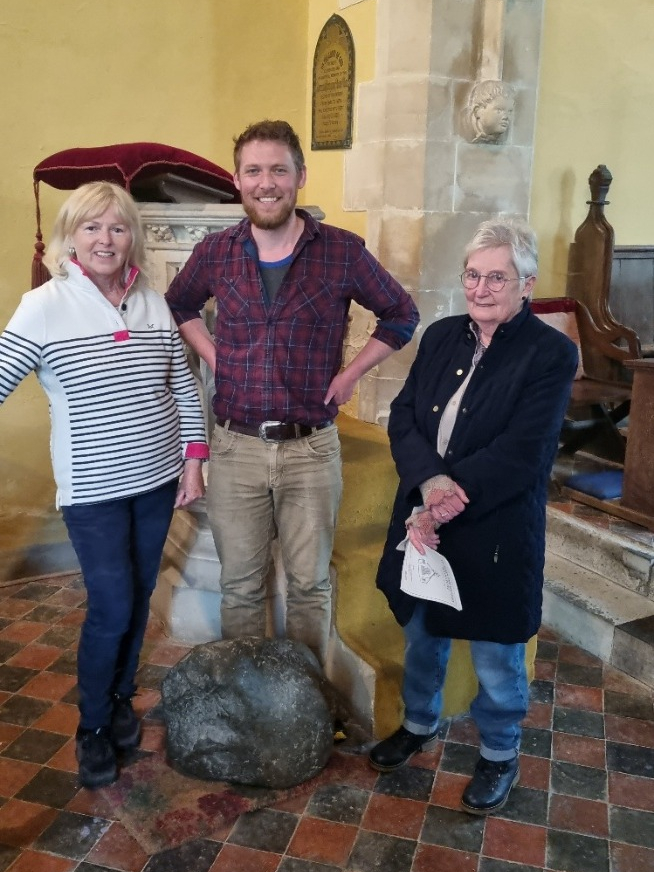
It was a beautifully sunny day in April, and I was overwhelmed by the generosity and welcome we received from our hosts. After the usual introductions, we were shown into the church and given its history whilst being walked towards the altar, where, just as described, the Maegen Stone sat on a piece of carpet beside the pulpit, watching over the congregation.
The stone wasn’t at all what I had imagined beforehand. Compared to the ‘typical’ oval-shaped stones of strength I’ve seen in Scotland and Wales, the Maegen Stone immediately struck me as unusually angular with a glass-like polish to its surface that reflected the light. We were invited to carry the stone out to the graveyard and make our attempts, as possibly the first lifts since 1958. I took the opportunity to re-weigh the stone with modern scales, and it came out at 91.5kg (201.5 lb), only 5 lb (2.27kg) lighter than when it was weighed in 1958.
I was joined on the day by Dave Proctor, David Brodlie, and Jono Pritchard who were all more muscularly equipped to take on the challenge of casting the stone over their shoulder, but I was honoured to be asked to make the first attempt. I couldn’t get the stone onto my left shoulder for a cast, though I was more than happy to have lifted it to my chest and become a part of the story of the Maegen Stone. We had brought two drop mats with us to ensure the stone could be cushioned safely after a lift and a cast over the shoulder. A feat all three of my companions achieved, to a roar of applause from the watching community. I couldn’t think of a better way to spend a Sunday morning.
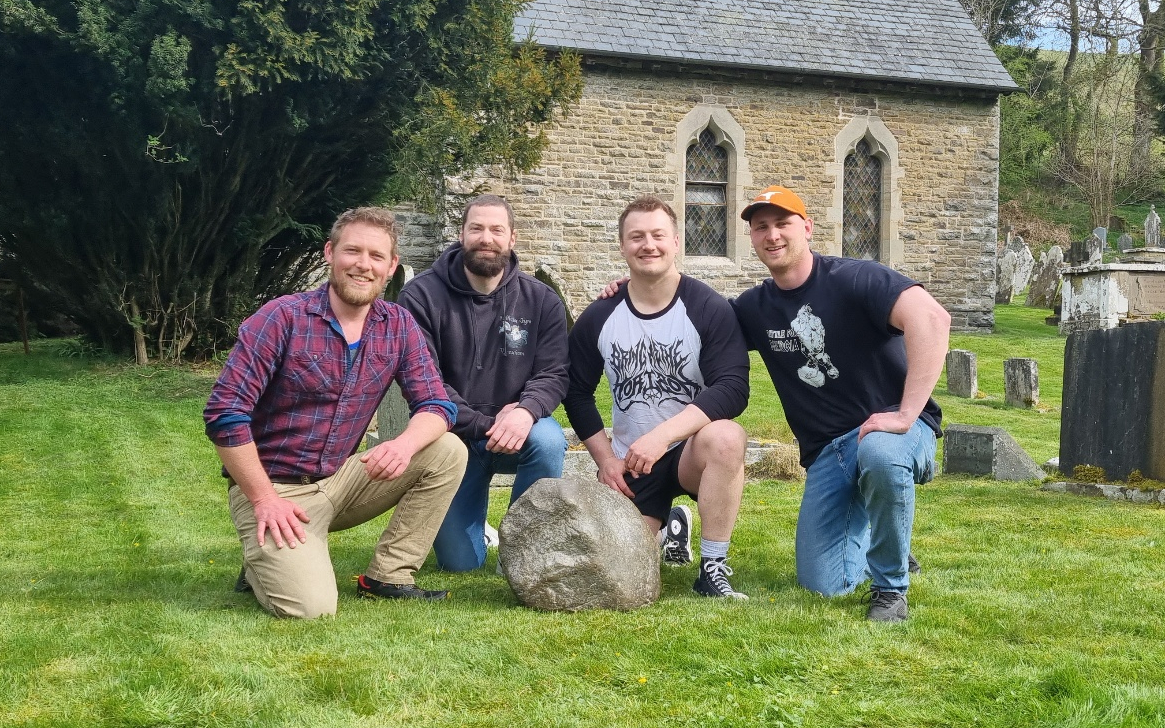
Folklore and geology
Whilst in Mainstone, I had the pleasure of meeting Gordon Lewis who was born and lived all his life in Mainstone. At the age of 82, he still recalled seeing the stone last lifted in competition. As a young boy, he attended the village hall’s opening fete in 1958 and watched the grown men lift the stone. He recounted stories of his Great Grandfather being one of the strongest men in the village and was revered by many in the 1930s – two other men in the village could lift it to their chests, but his Great Grandfather was known to easily cast it over his shoulder.
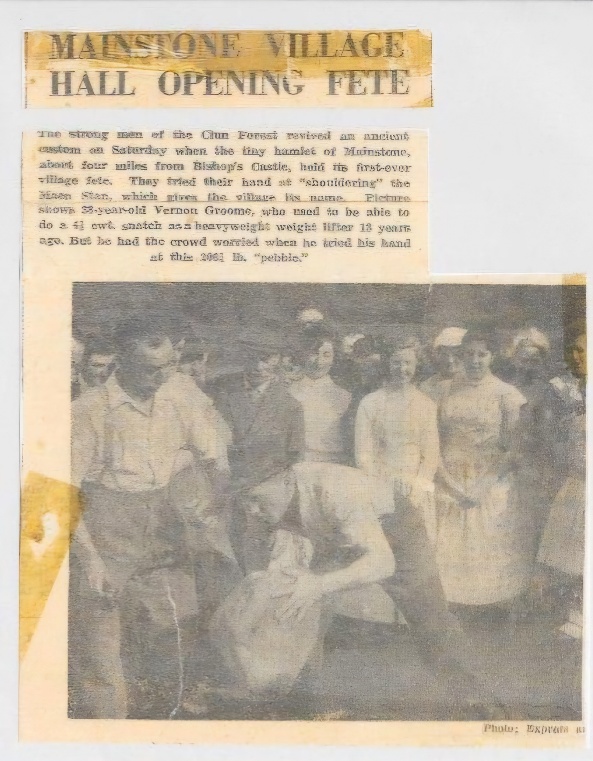
Growing up, Gordon recalled several stories about the origin of the stone. It was thought that one evening a deafening crack was heard across the parish whilst a blinding flash lit up the sky as a fireball fell from the heavens. The next morning, the stone was found in a crater outside the church.
Another story told that when the area was suffering a drought and many of the community were starving, a young man crept up a nearby hilltop called Caer Din where a Giant was said to live – now known to be an Iron Age or Romano-British settlement. He stole a goose and was carrying it back to the village when the church bells rang, the Giant awoke and threw a boulder at the man in an attempt to stop him – it landed beside the church and has remained there ever since.
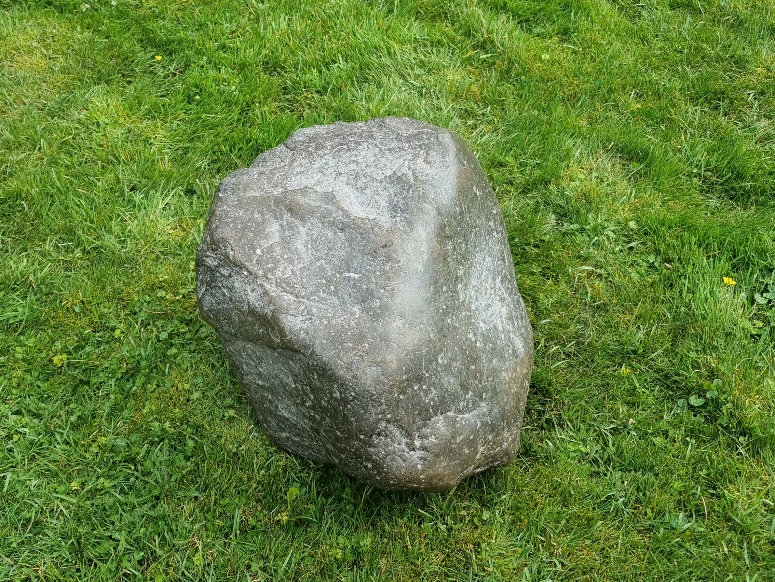
But the most intriguing story was where Gordon believed it came from geographically. He knew that the stone was unlike any of the geology found locally, in fact he thought folks used to say it was carried up the valley from a hill some 20 miles (32km) away.
This made me curious about the stone’s lithology, which to my untrained eye appeared igneous in nature. After some research, the only substantial outcrop of igneous rock in the area lay approximately 30 miles (48km) to the south-east at Titterstone Clee (not so far off Gordon’s estimate).
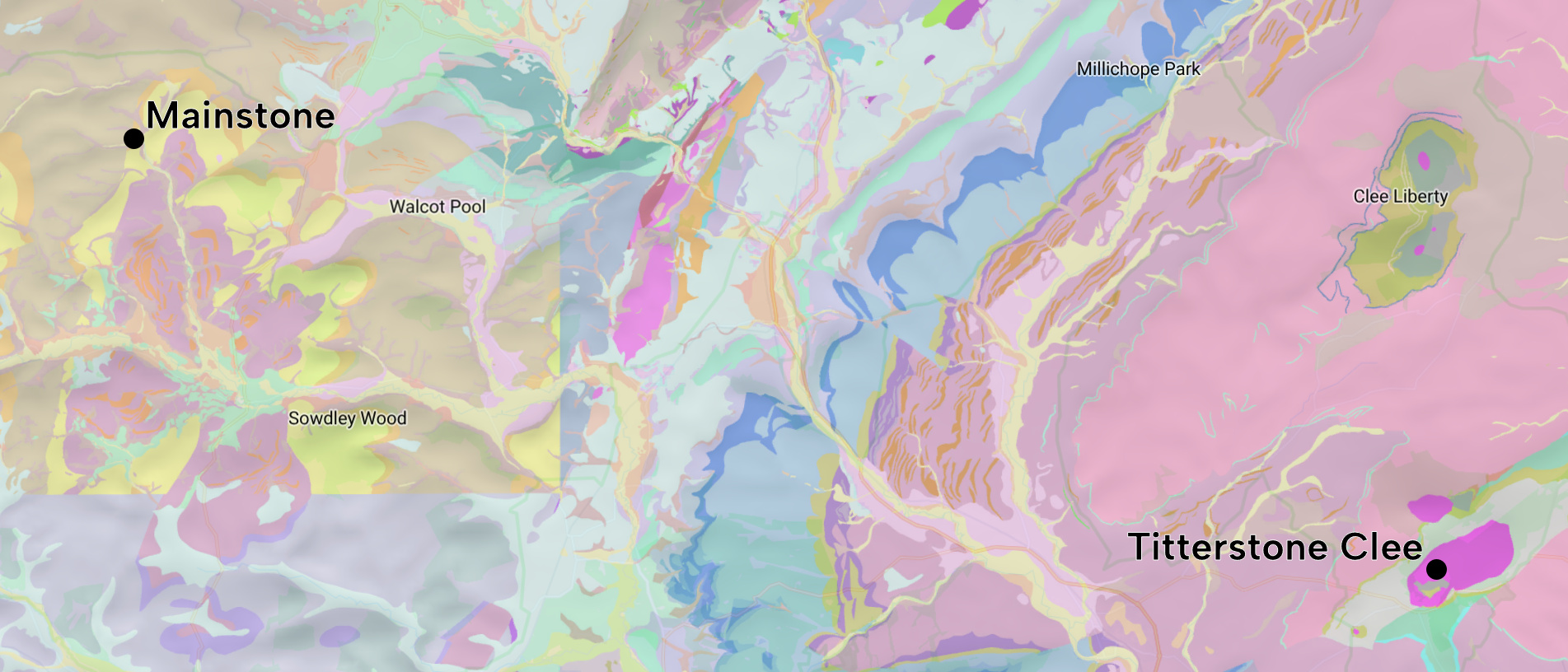
Long renowned for its quarries – and extensively worked during the Victorian era – the hill also contains the remains of a Bronze Age cairn near its summit, dating back around 4,000 years, as well as an Iron Age hillfort. Together, these features suggest the hill was an important place for ceremonial and human activity over many millennia.22 Its bedrock consists of a dark dolerite known locally as “dhustone” (probably derived from the Welsh du, meaning “black”), a rock prized by the Victorians for its exceptional hardness and widely used as paving stone in towns such as Newport.
The British Geological Survey characterises this dolerite – dhustone – as an:
Unnamed Sill, Westphalian-Microgabbro. These igneous rocks are magmatic (intrusive) in origin. Poor in silica, they form intruded batholiths, plutons, dykes and sills.
After consultation with Morgan Price, a fellow stonelifting enthusiast and geologist, he identified some additional areas of igneous rock that could be a possible source. The closest is the Hyssington Volcanic Member, located approximately 5-12 miles (8-19km) to the north across the Welsh border.
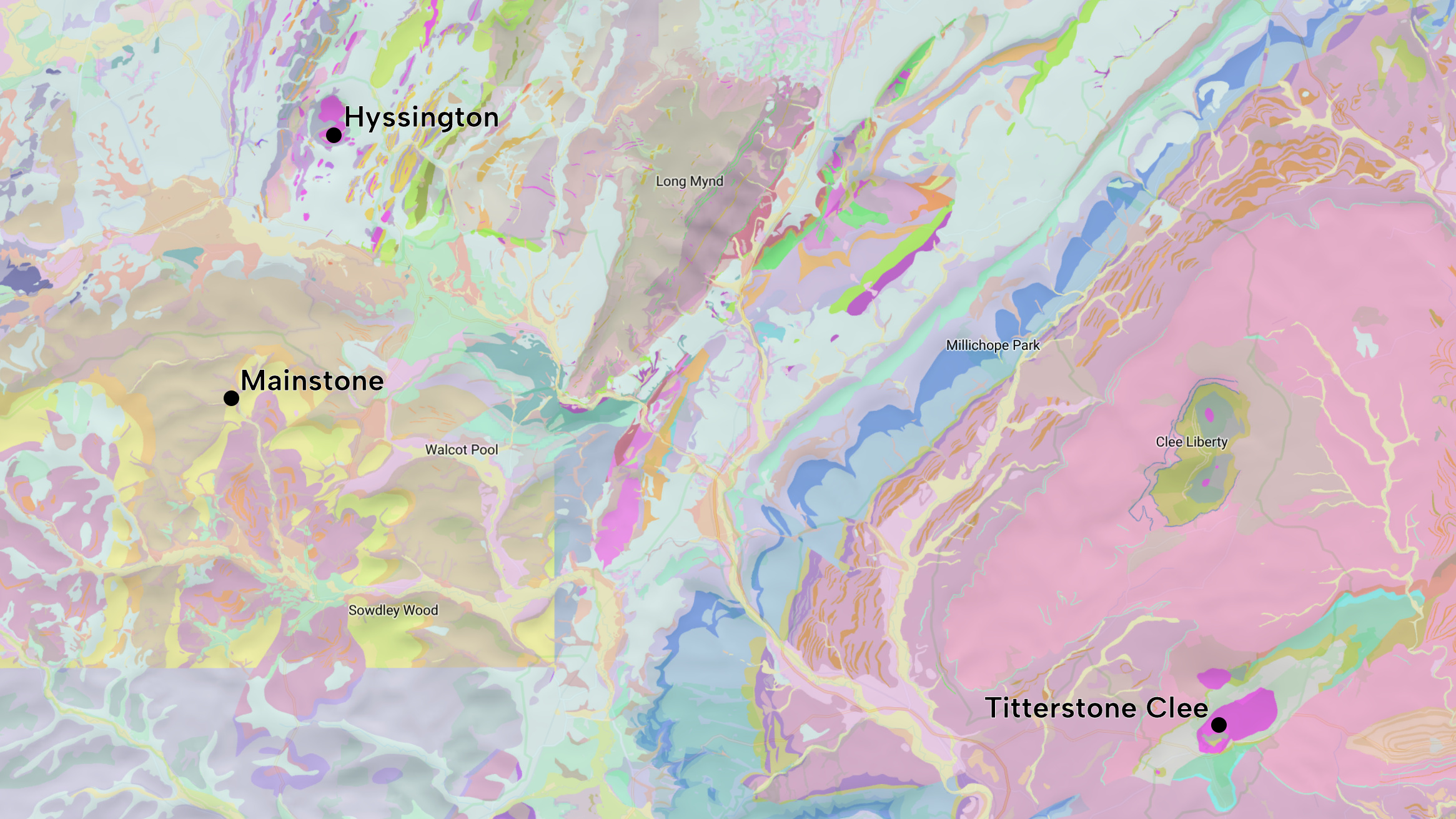
These rocks represent volcanic deposits laid down during the Ordovician Period around 480 million years ago. The sequence contains a variety of igneous lithologies, but the dark dolerites and microgabbros are of particular interest, as they appear to closely match the colour and texture of the stone. The area also contains numerous historic mining sites, glacial deposits and river systems, all of which may have played a role in transporting or exposing the stone.
The Maegen Stone bears a striking resemblance in colour to rocks from both locations, and without detailed geological analysis, it is impossible to say with any certainty where it originated.
Given their regional proximity and similarities, it is quite probable that the stone is derived from either of these dolerite intrusions. Fellow geologist and stone lifter, Dale Nesbit suggests that:
in contrast to the angularity of the dhustone talus found at Titterstone Clee, the rounded edges and smooth surficial polish of the Maegen Stone suggest that its form has been influenced through increased exposure to one or more weathering processes or anthropogenic modification.
If indeed the stone was rounded off and transported as a glacial erratic, it is more likely that it originated at Hyssington due to the directional travel of glaciers during the last ice age. Though this would be contrary to Gordon’s story of it being carried up the valley for 20 miles (32km).
How, or why, such a stone might have been transported many miles into the Shropshire Hills is a mystery we may never fully solve. Given its unusual nature and exceptional durability compared with the surrounding geology, it is tempting to imagine that it was recognised and valued by early Britons, perhaps quarried, moved and preserved as something of special significance. For now, its true origins remain uncertain. Perhaps a future expedition to both sites will provide a few more clues and help answer some of the questions that still surround this remarkable stone.
Timeline
We have the following timeline for the Maegen Stone into the 20th century:
Pre-1900
The stone was kept at the west gate to the church, where it was used as a test of strength since time immemorial.
Post-1900
It was moved from its original location and taken down into the centre of Mainstone and kept beside the phone box and village green. Here it could be lifted more regularly and became a focal point to the community, and it was at this point when it was used at Clun Fair.
1910s
The Maegen Stone seemingly could not be found at this time. During the Powys Land Club’s AGM in 1913 a discussion on the article ‘History of the Parish of Mainstone’ by ES Mostyn Pryce23 is recorded:
the Archdeacon asked what was the stone that had evidently been held in such great reverence and where was it now? They did not expect to find a medieval cross or anything of that kind, but there was most likely a rough boulder like those in the churchyards at Welshpool and Berriew
1920s
Sadly, after the Great War, interest in the stone was lost. It became neglected, grew moss, and was hidden in the overgrown grass.
1930s
Some members of the local community came across the stone and began lifting it again. It was decided to return it to the church, where it could be better looked after, and it found its new home inside the church.
1940s
Nothing is known from this period. Its move to the church and the repercussions of the Second World War may have stopped it being lifted again.
1950s
In 1958, in celebration of the opening of the new village hall, the stone was brought down from the church to resurrect the tradition of lifting the Maegen Stone. At this point we have a detailed account, as it was recorded in the local newspaper:
A most unusual event only possible at Mainstone – was the competition to guess the weight of (and lift onto the shoulder if possible) the “Maen-stan” a large stone weighing 206½ lbs. The Stone was exhibited by permission of the Rector of Mainstone.
2025
Dave Proctor, Jono Pritchard, David Brodlie, and I carried the stone back out into the churchyard, and all made successful lifts. All but myself made a successful cast over the shoulder.
Present
Available to lift with prior permission.
What’s in a name?
The stone’s origins might never be fully understood – but we may at last have a name that medieval England gave to a stone of strength: Mægen Stān.
This isn’t to say that the Anglo-Saxons necessarily had their own culture of stonelifting to test strength. We know that at some points throughout history Mainstone was a part of Cymru (Wales), which has a well recorded history of strength stones. They are defined mostly as Carreg Gamp, Y Garreg Orchest or Y Maen Camp, whilst the stone found at Mainstone has deviated from this naming pattern. Its location being so close to the Welsh border might suggest that the practice was borrowed by the English and adopted as their own. Could it be that the stone was originally used by the Welsh/Britons, who described it to the English, and was then re-named using their own words? A text written by William Fitzstephen around the 1170s suggests this may be the case. The book, which was translated from Latin by Samuel Pegge in 1772, is entitled Fitz-Stephen’s Description of the City of London, newly translated from the Latin original; with a necessary commentary:
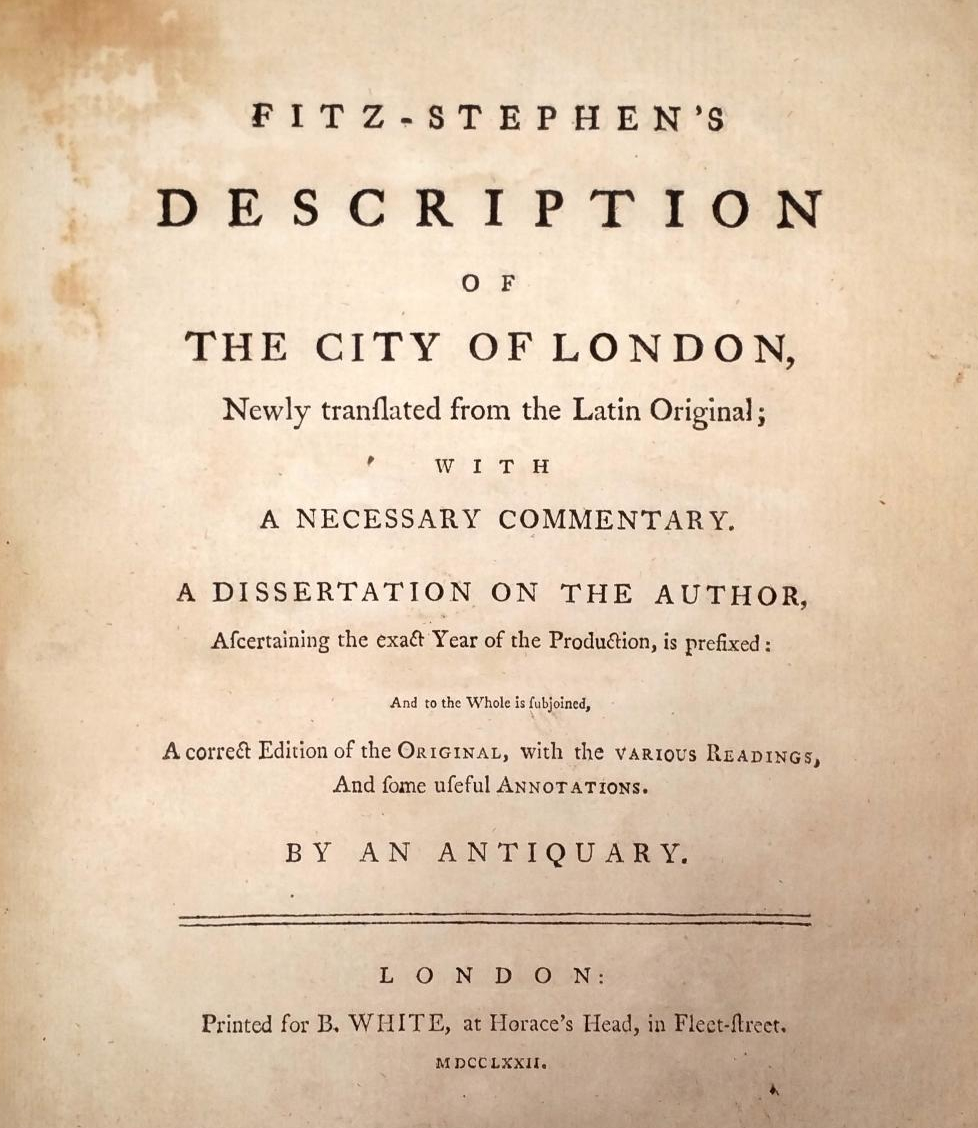
On holidays, in summer, the pastime of the youth is to exercise themselves in archery, in running, leaping, wrestling, casting of stones*, and flinging to certain distances, and lastly with bucklers.
*A Welsh custom, and as they throw in some parts of England the blacksmiths stone.24
The pastime of casting the stone (Jactu lapidum in latin) was practised in London, as well as other parts of England during the 1100s, which Pegge described as a “Welsh custom”, suggesting he knew it as a tradition of the Welsh in the 1700s. He also notes an English counterpart in throwing “the blacksmiths stone”, linked to blacksmithing in some way, though I’ve been unable to find any details about what exactly this was.
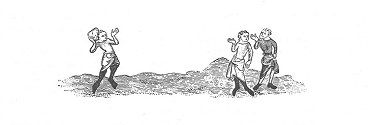
With the Maegen Stone sitting on the Anglo-Welsh border and its similarities to Y Maen Camp throwing stones, it aligns more closely with it being a stone of Welsh origin. Perhaps the Anglo-saxons preferred throwing stones forwards rather than backwards like the Welsh, and as the sport become more standardised in England it transformed into what we know today as shotput or bowls – though current consensus suggests its link to bowls are unfounded.25
No matter where the stone’s origins lie, the simple truth it gives us is the knowledge that England has a history of stonelifting which dates back close to 1,000 years – a common pastime linking us to our ancestors, a tradition shared across cultures and nations.
Whilst I describe this stone as one of my favourites in England – it shouldn’t be thought of within the bounds of national borders. It belongs to a wider culture of stonelifting in Britain and Ireland, a practice which most likely pre-dates any influx of Angle, Saxon or Jute from the continent, one which was shared across the world. To me, the Maegen Stone, with its links to both Wales and England, its similarities to strength stones in Scotland, Norway, Switzerland, and Ireland, as well as its wealth of stories and folklore is what makes this stone so special and definitely worth a visit.
The stone guardians
The community at Mainstone are extremely inviting and are supportive of their stone tradition being continued. The current churchwarden for St John the Baptist Church is Nowela Swanson and has kindly agreed to allow visits to the stone by prior arrangement.
Please adhere to the following guidelines presented by the church:
- All lifts must be arranged in advance with ample notice.
- The stone must be safely carried outside the church to protect the flagstone floor (come in pairs and bring something to carry it with).
- A drop mat should be used for all lifts. If attempting a “cast over the shoulder” then a second mat should be used.
- After a successful ‘chest lift’ and lower, request permission before attempting a cast over the shoulder.
- All lifts to be undertaken well away from the building or any gravestones.
- No tacky. Chalk is permitted but excess should be cleaned off.
- Follow all instructions given by the church/community.
- Please consider donating to the church on your visit.
- Respect the stone. Respect the community. Respect the past.
Remember:
Stones belong to a vast family of lifters many of which are dead; a few are living, and countless numbers unborn.
– James Grahame
Additional advice on proper lifting technique is available in the Stonelifting Etiquette article.
The Maegen Stone is located at the St John the Baptist Church in Mainstone. You can find the location on the liftingstones.org map. To arrange a visit, email Nowela Swanson.
Acknowledgements
This article has been over a year in the making, deep diving into the background of the Maegen Stone. It has consumed my life at times, but it’s been a pleasure to research and write. It wouldn’t have been possible without the generosity and help from the following people:
- Jane Jenkins and her husband; for first passing me on the information about the stone.
- Nowela Swanson; for being so helpful and for allowing us to visit.
- M. Ellison; for her invaluable scrapbook and knowledge of the local area.
- Gordon Lewis; for his incredible memory and sharing his stories with me.
- Cathy Michie, Jamie Veale, and Siobhan Shaw at Oswestry Library for their assistance in tracking down books and scanning pages.
- Stephen Rodenhurst (Rights of Way Officer at Shropshire Council); for suggesting avenues of books on folklore.
- Charlotte Orchard (Senior Historic Environment Records Officer); for providing references and details held by the local Historic Environment Record.
- Luke Bassnet-Barker (Countryside Archaeological Advisor); for help understanding historic weights and measures.
- Richard Morgan (retired archivist and etymologist); for generously sharing his expertise on etymology.
- Morgan Price and Dale Nesbit; for their knowledge and assistance with the geology.
- Dave Brown; for his invaluable editorial skills in honing the article to what it has become.
Author
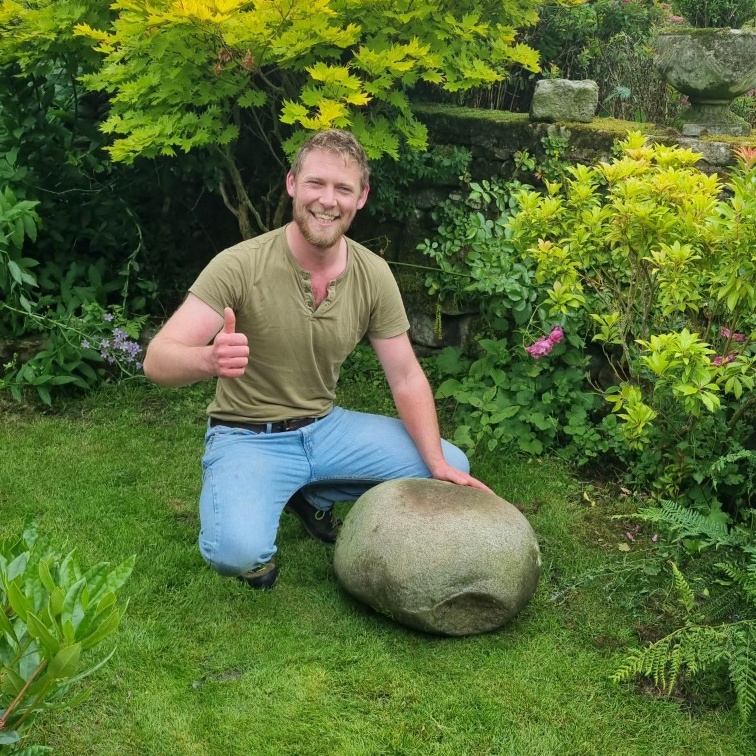
Calum Stott is a farmer and ranger from Cumbria with a passion for local history and folklore. He first encountered stones of strength after listening to David Keohan passionately talk about his own rediscovery of lifting stones in rural Ireland. Since then, Calum has been scouring the north of England to discover lost historic lifting stones and preserve their bygone traditions and stories.
References
-
Pronounced /ˈmæ.jen stɑːn/. Listen at IPA Reader ↩ ↩2
-
Herefordshire Genealogy, The Victorian English hiring fair (2019) ↩
-
Chapel Lawn parochial magazine, (1890-1899) ↩
-
Robert William Eyton, Antiquities of Shropshire (1854) ↩
-
Rev. C. H. Drinkwater, Transactions of the Shropshire Archaeological and Natural History Society, ser. 1, vol. 7 (1884), p. 127 ↩ ↩2
-
H. C. Maxwell Lyte, ed., Calendar of the Close Rolls preserved in the Public Record Office, Edward I, vol. 2 (1279-1288) (London: HMSO, 1902), p. 261 ↩
-
Rodger Beamond, A short journey from England to Wales: a study of borderland place names in the Middle March (.pdf), National Library of Wales Journal ↩
-
Margaret Gelling, with H. D. G. Foxall, The place-names of Shropshire (1990), pp. 193-194 ↩ ↩2
-
Joseph Bosworth, A compendious Anglo-Saxon and English dictionary (1855) ↩
-
Emerald Isle, On the lifting and throwing of stones ↩
-
P. W. Joyce, Irish names of places, vol. 3 (1913), p. 208 ↩
-
Shrewsbury Local History, Drinkwater Street ↩
-
Historic England, Church of St John the Baptist, list entry 1176459 ↩
-
Roy Palmer, Folklore of Shropshire (2004) ↩
-
D. H. S. Cranage, An architectural account of the churches of Shropshire (1908), pp. 447-448 ↩ ↩2
-
W. H. Prior, Notes on the weights and measures of medieval England (1924) ↩
-
Ronald E. Zupko, A dictionary of weights and measures for the British Isles: the Middle Ages to the twentieth century (1985) ↩
-
loftestein.no, The Trolten of Åsland ↩
-
Shropshire’s Great Outdoors, Blue Remembered Hills bridleway route 4 ↩
-
steinstossen.ch, Geschichte ↩
-
E. S. Mostyn Pryce, History of the parish of Mainstone ↩
-
William Fitzstephen, trans. Samuel Pegge, Fitz-Stephen’s Description of the City of London, newly translated from the Latin original; with a necessary commentary (1772) ↩
-
Encyclopaedia Britannica, 11th ed., vol. 4 (1911) ↩
Read the liftingstones.org letters
Join thousands of other stonelifters who read the world's most popular stonelifting newsletter.