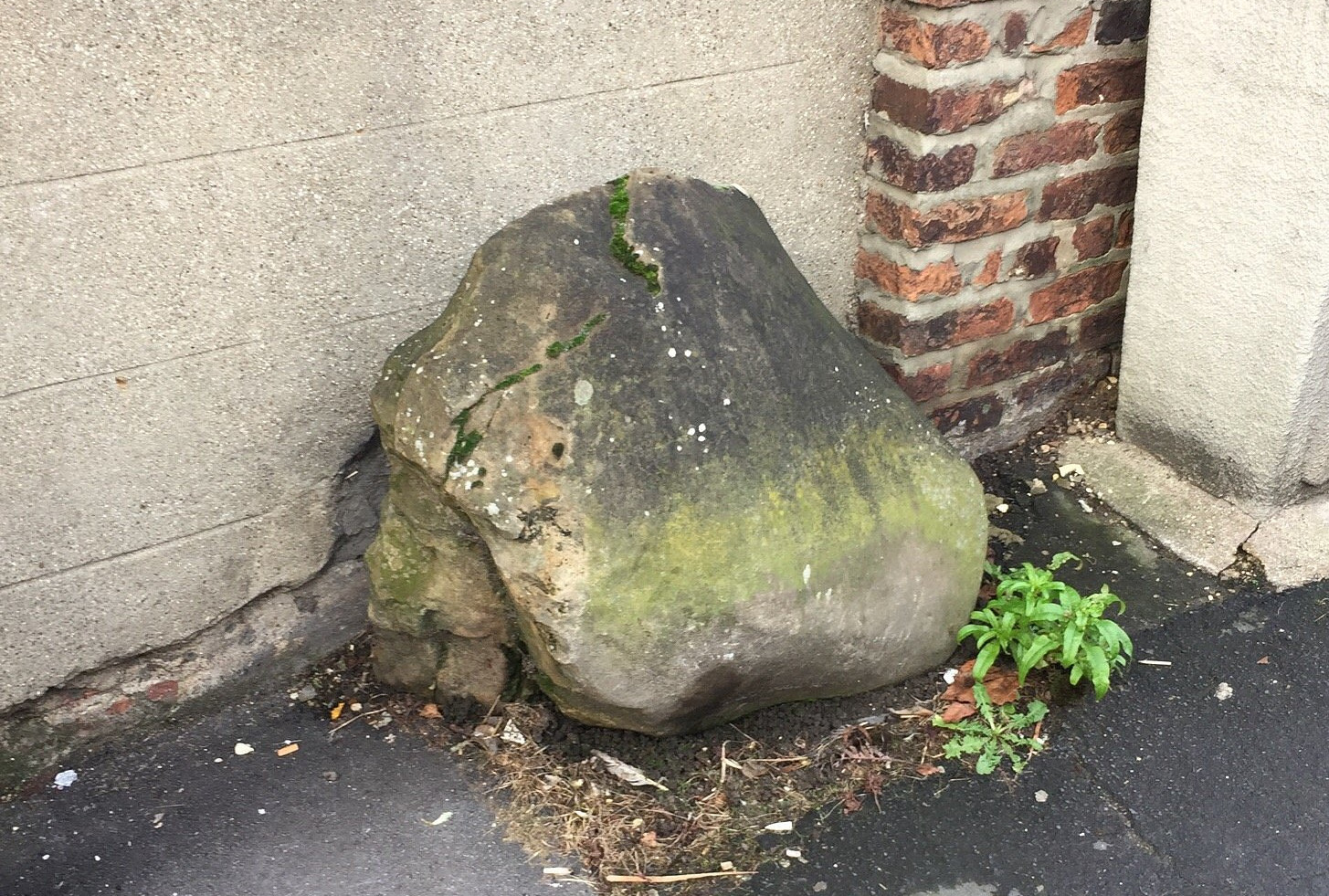
 Historic stones
The stone carried by 'The Yorkshire Giant' William Bradley in the early 1800s
Dave Brown
Historic stones
The stone carried by 'The Yorkshire Giant' William Bradley in the early 1800s
Dave Brown
The Giant’s Stone
This seemingly unremarkable stone lies on a Yorkshire street. But it has a big story.
History
William Bradley of Market Weighton was born in 1787. As a child he grew quickly, drawing the attention of other children who mocked him for his height. By the time he reached 18, he was a towering 7 feet 9 inches (236cm) and weighed 27st (171kg, 378 lb). Over 200 years later, William is still recorded as England’s tallest man.
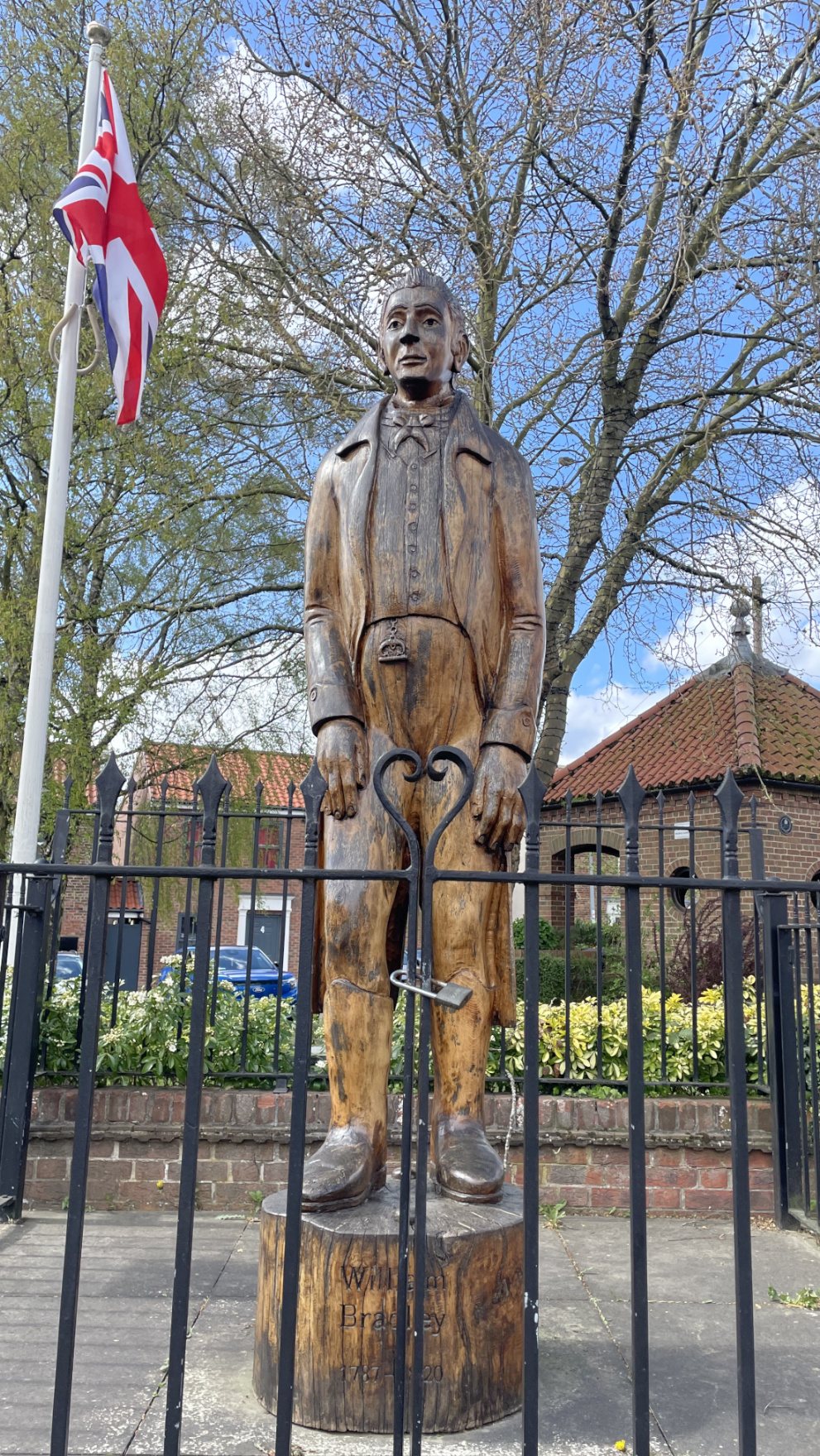
After leaving school, William put his size and strength to use as a farm hand. It’s said that he would regularly break the tools designed for average-sized people and had to use bespoke tools instead. Eventually, he was discovered by a travelling show known as Barnum’s, where he became part of the exhibition alongside a dwarf, drawing large crowds wherever they went.
Other notable stories include several wagers where William could show off his immense strength. In one of these bets, William accepted a challenge to load a manure wagon faster than two regular-sized men. It’s said the giant comfortably filled his wagon long before his competitors. The wager that matters for this story, however, is the one involving this stone.
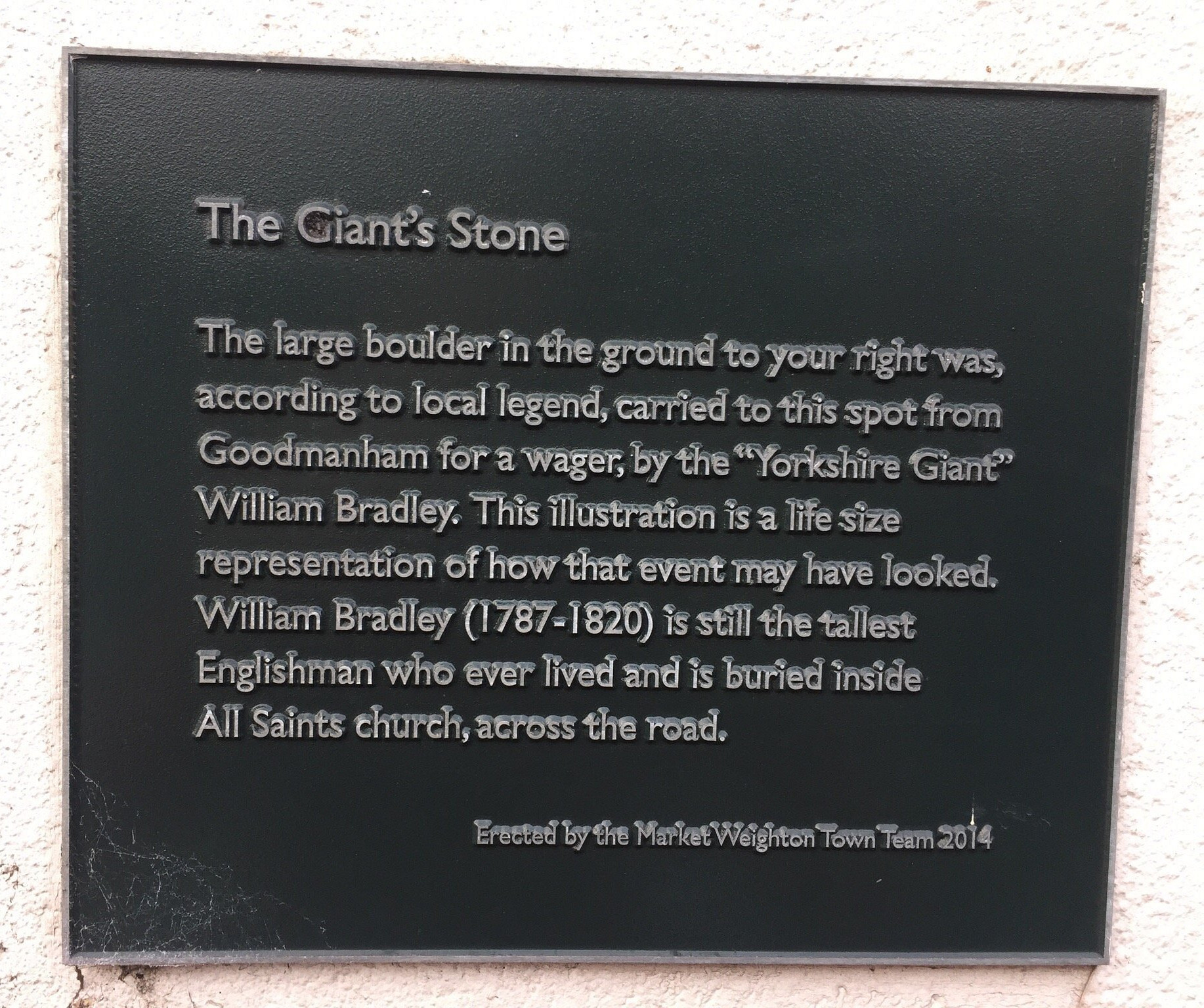
The bet was simple. William had to carry the stone from Goodmanham – the neighbouring village – back to Market Weighton, a distance of about a mile (1.6km). According to the legend, William accepted the wager, lifted the stone, and carried it to its current spot on Londesborough Road opposite All Saints’ Church, where he was buried after his death.
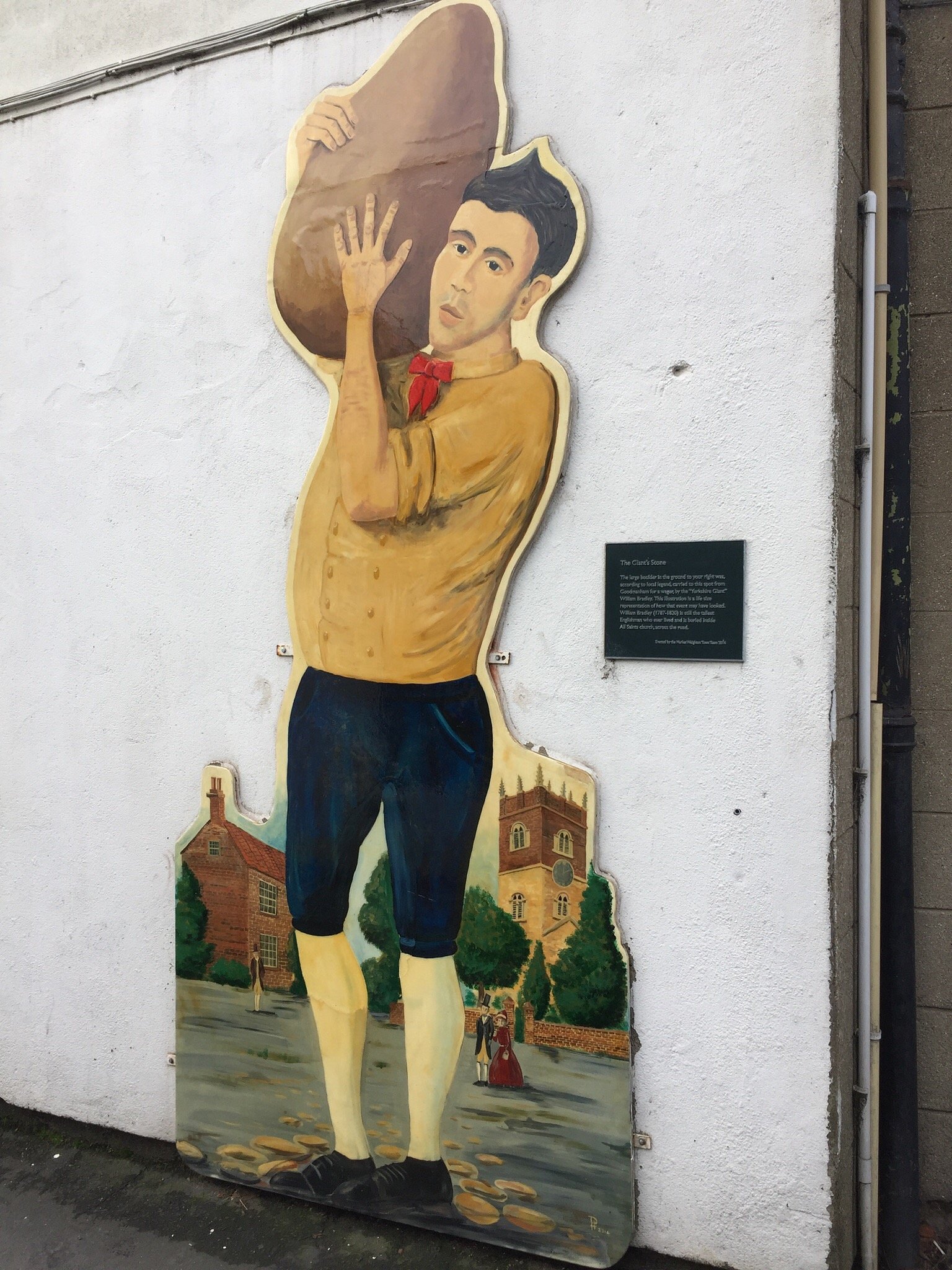
Based on the size of the stone, a front carry seems more likely than the shoulder carry shown in the mural. A front carry would put the feat closer to other heavy carrying challenges, like the Húsafell Stone.
The distance William actually covered is somewhat disputed. Some sources say he carried the stone all the way from Goodmanham1 about a mile (1.6km) away, while other references say he carried the stone about a quarter of a mile (400m).2 A distance of 400m would place the stone on Goodmanham Road before being carried to its current location. It’s plausible William’s feat has been exaggerated over time or the starting location was a bit ambiguous. It’s also unclear whether William carried the stone in one attempt or whether he was allowed to put it down and rest along the way.
The plaque at the mural next to the stone recounts the Goodmanham version of the story.
Location
The Giant’s Stone sits next to a life-sized mural depicting the giant’s feat. The stone appears damaged and partially buried in the pavement, so it’s likely unavailable to lift.
The location of The Giant’s Stone is on the liftingstones.org map.
References
Read the liftingstones.org letters
Join thousands of other stonelifters who read the world's most popular stonelifting newsletter.